What is the Standard Dock Height for a Warehouse?
The most common or standard dock height for North American and European warehouses servicing 53-foot (16.15m) semi-trailers is 48 to 52 inches (120 cm to 132 cm).
In North America, 48 inches is the prevailing standard to accommodate the average semi-trailer bed height (typically 44–52 inches). However, facilities that exclusively handle specific fleet types will adjust:
- Refrigerated Trailers (Reefers): Often require docks up to 55 inches (140 cm).
- City Delivery Trucks (Box Trucks): Often require lower docks, around 44 inches.
The best practice is not just to target the average, but to ensure your facility can handle the full range of vehicles.
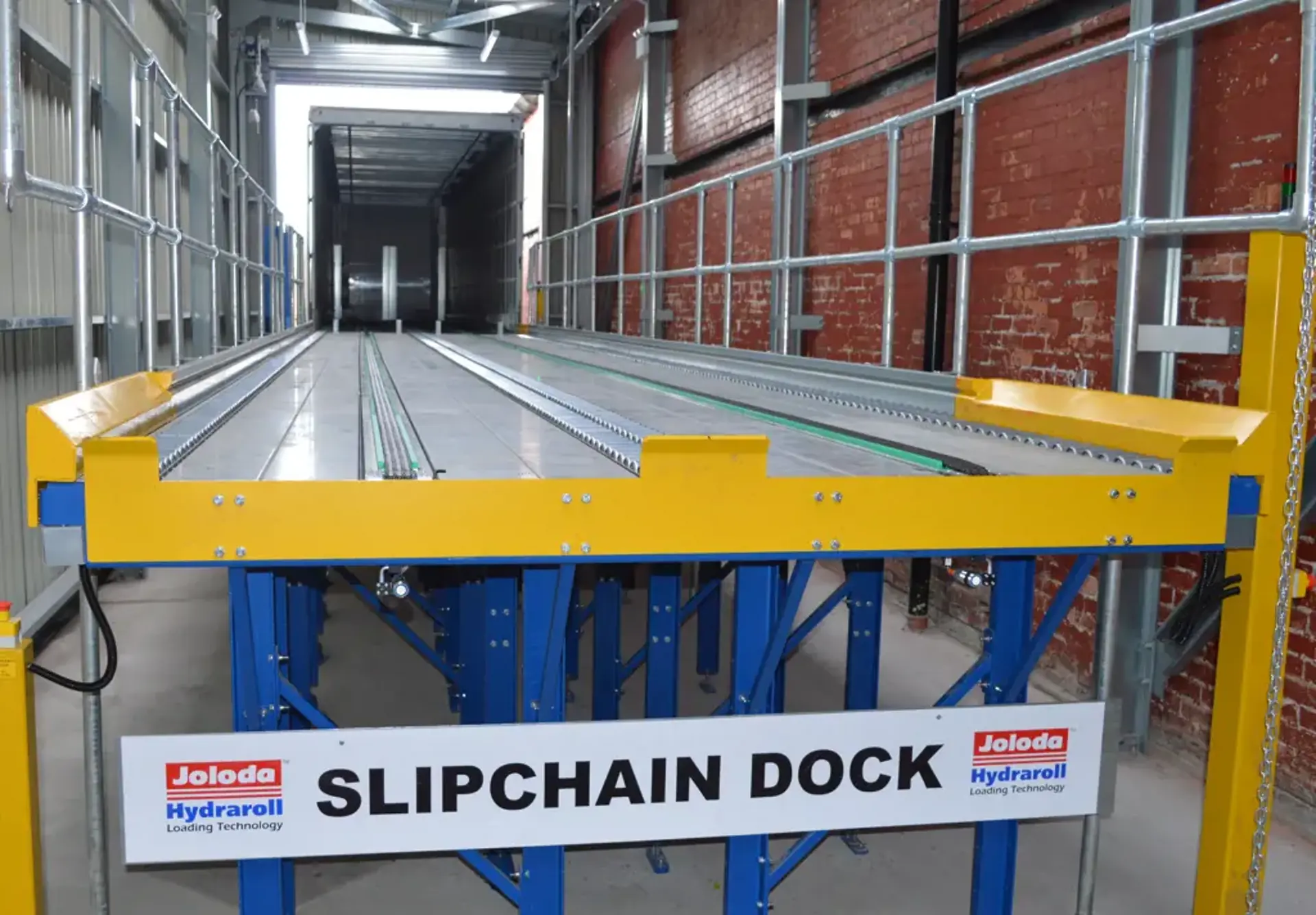
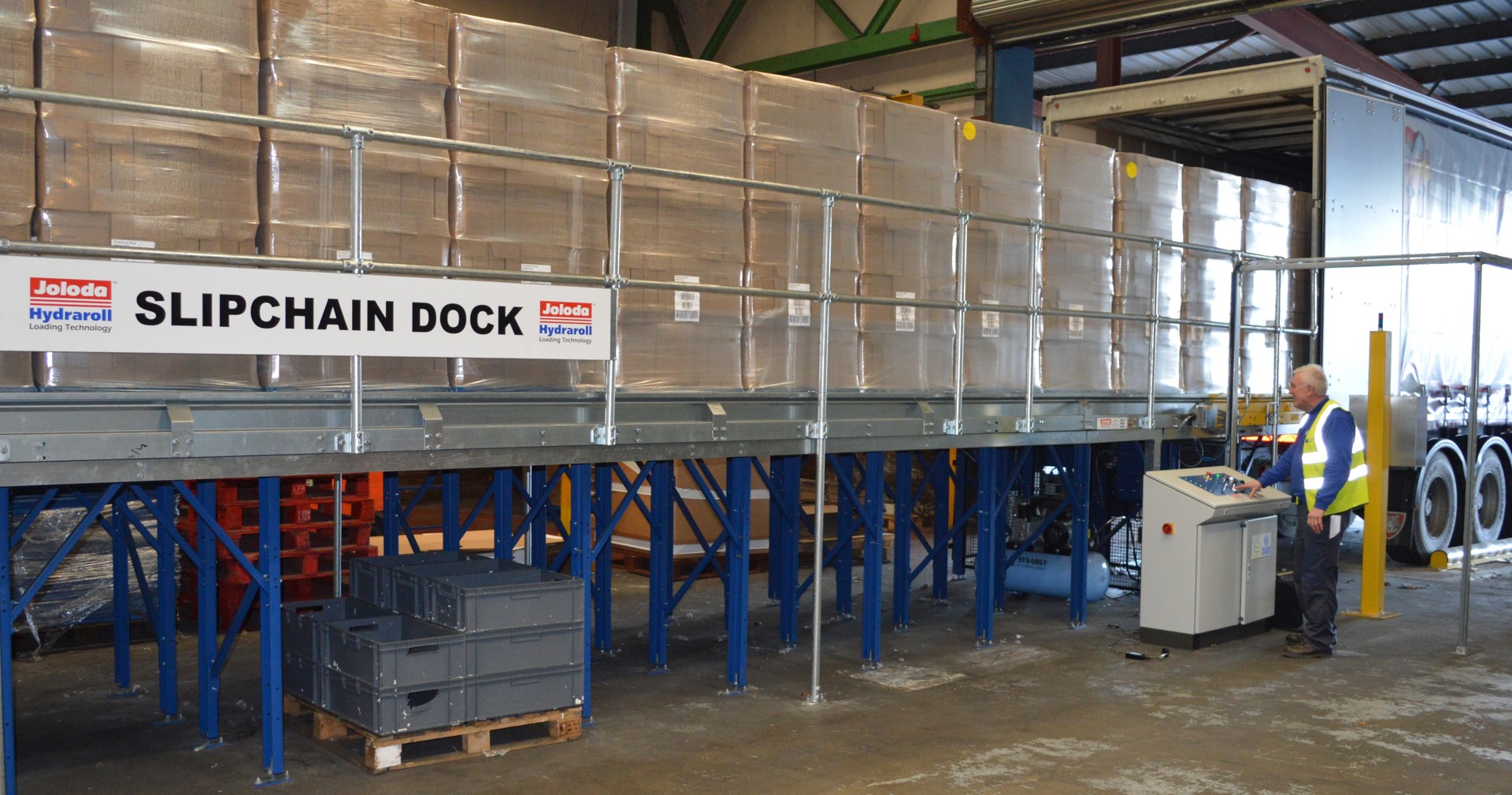
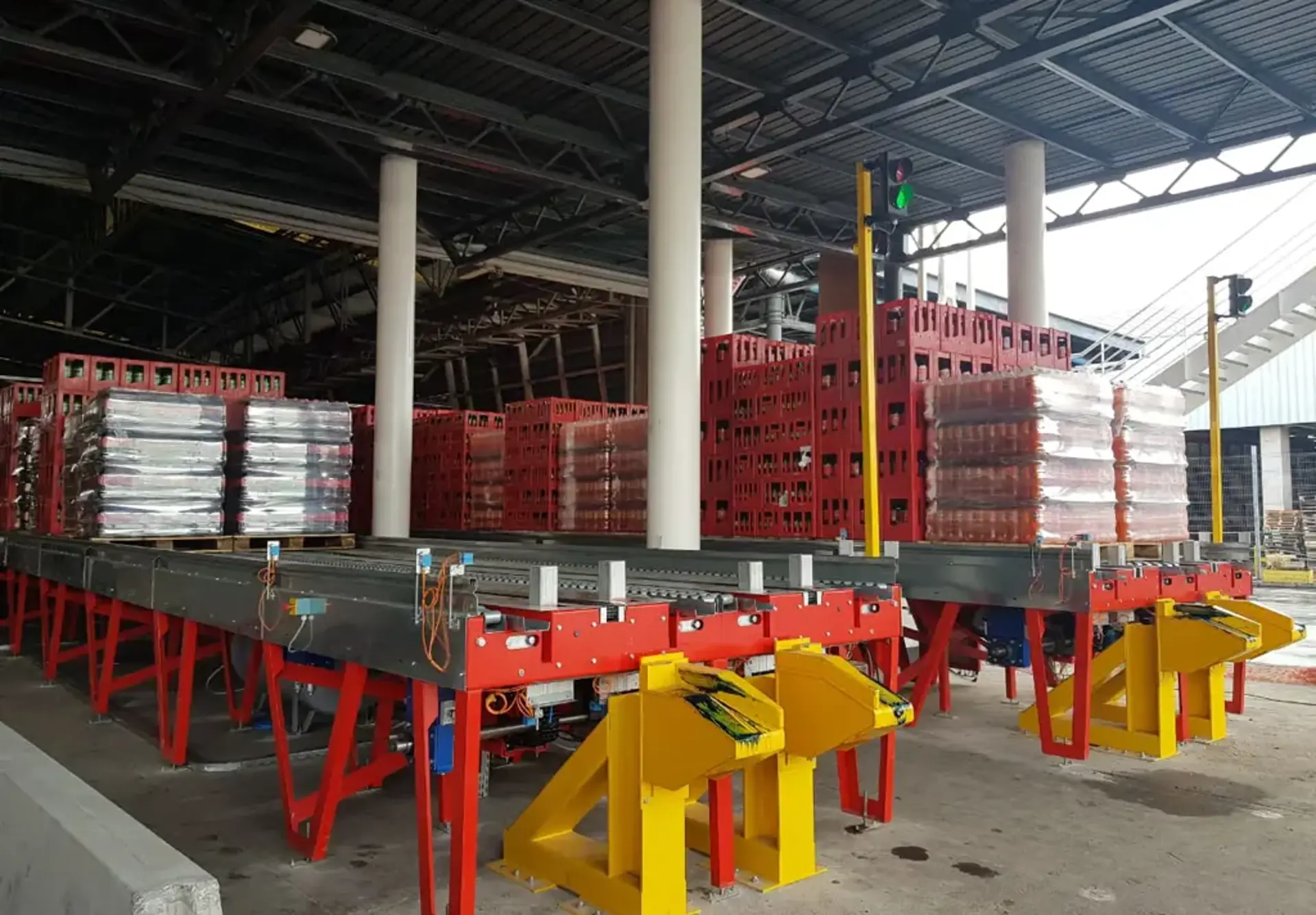
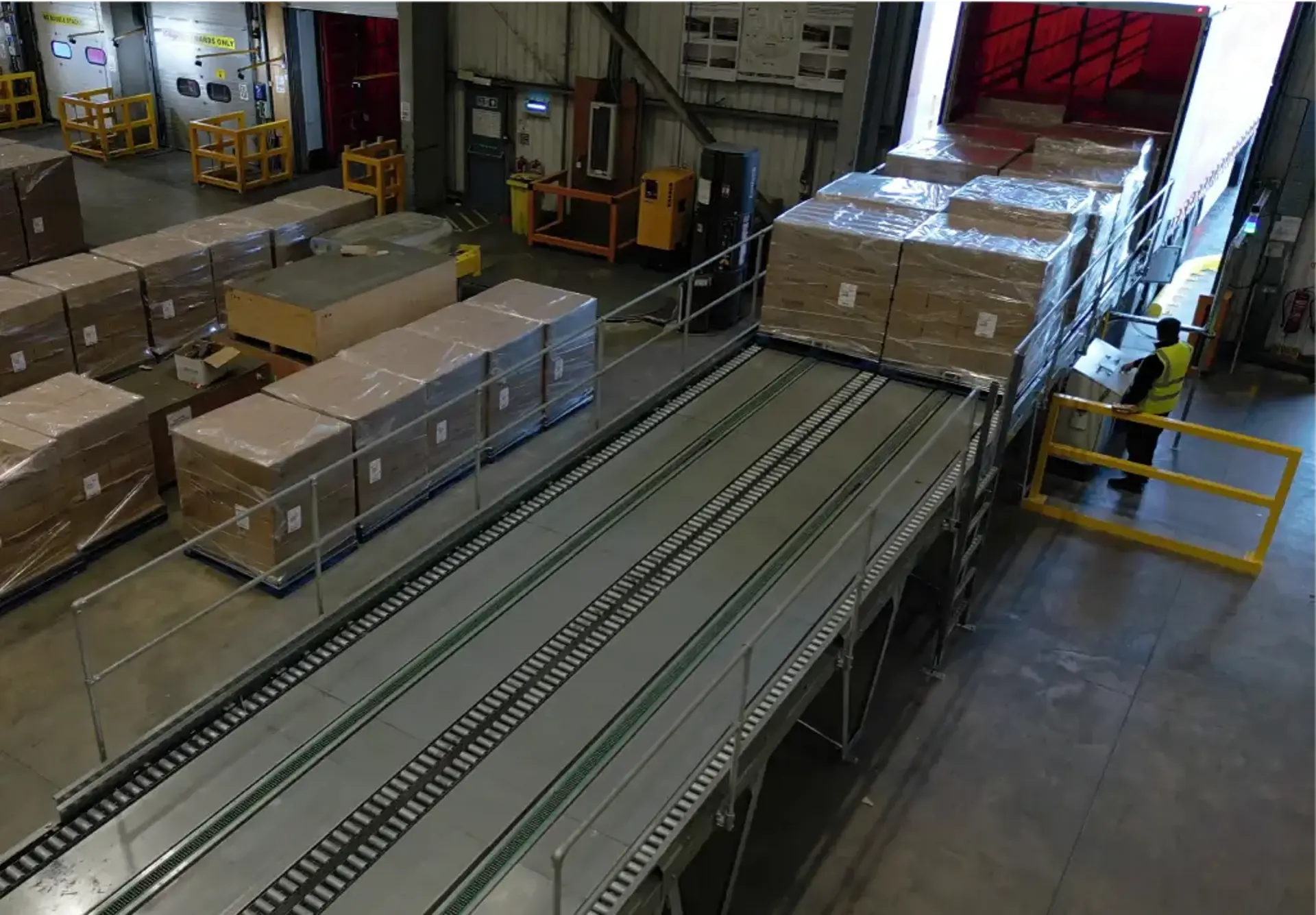
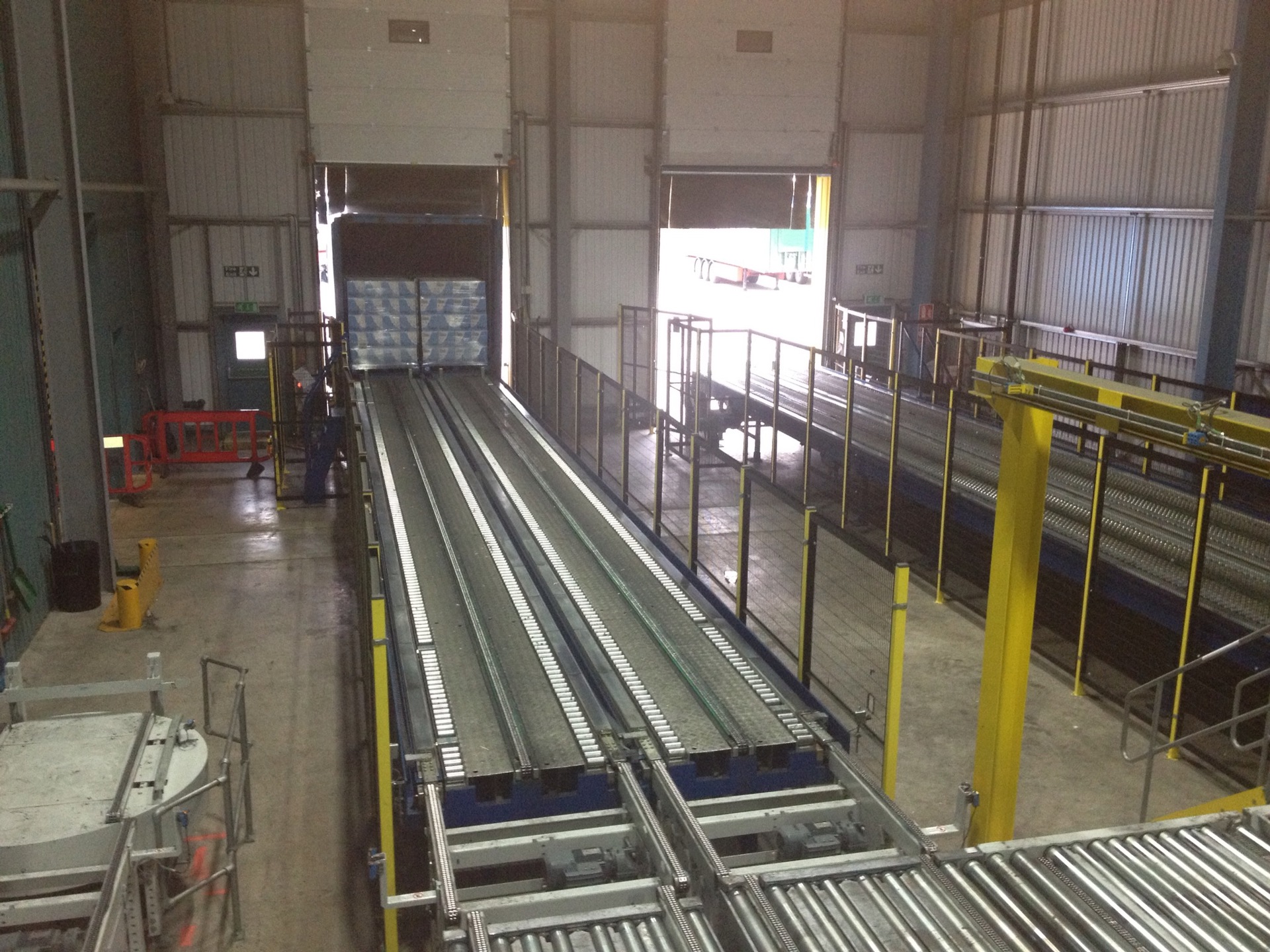
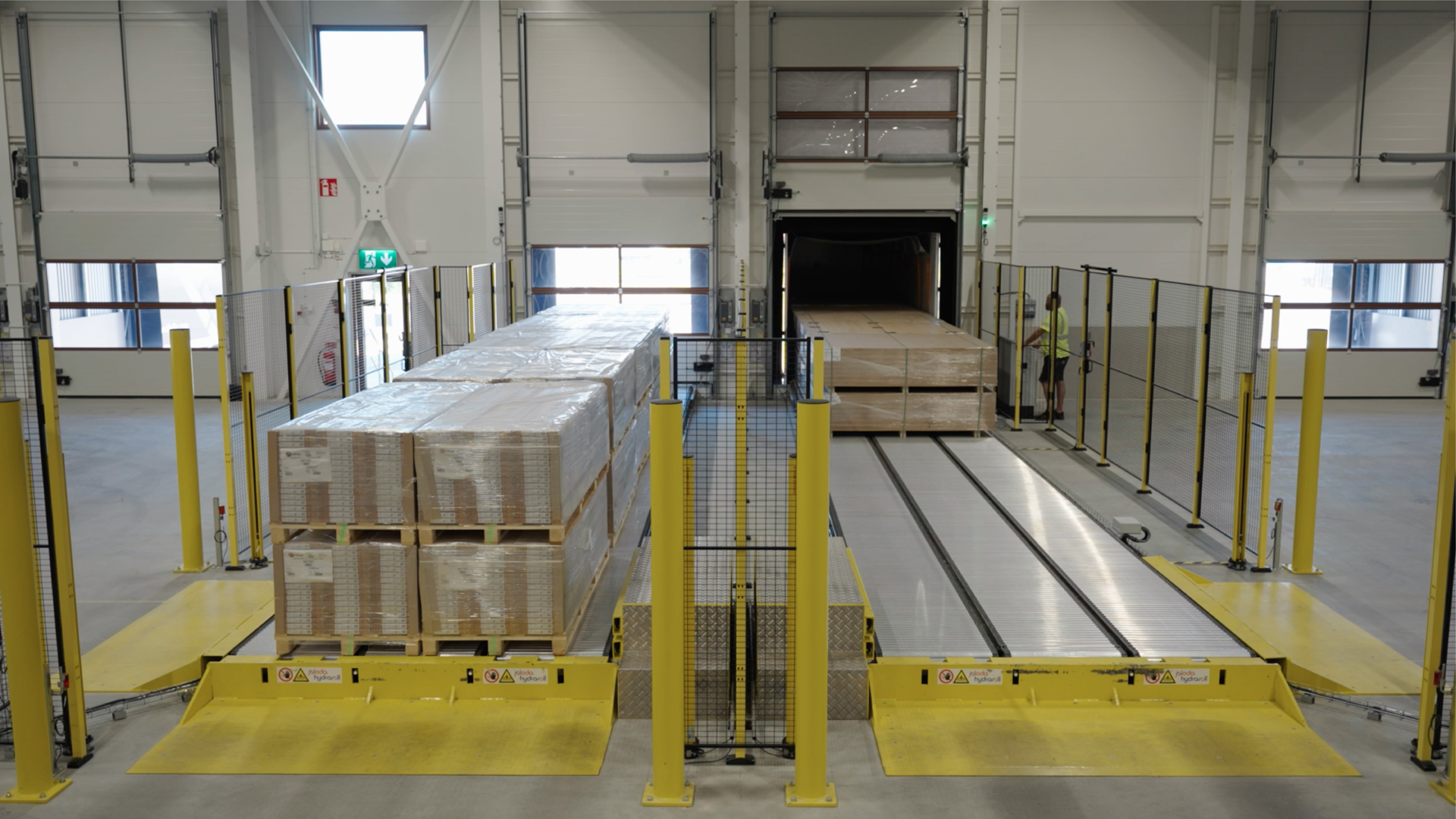
Our Automated Trailer Loading Solutions can automatically adjust load and/or trailer height to align for smooth loading.
What are Common Loading Dock Hazards?
The loading dock is statistically one of the most dangerous areas in a facility, accounting for approximately 25% of all industrial accidents. The most common critical hazards are:
- Trailer Separation Accidents: This includes trailer creep (the trailer slowly moves away due to forklift movement) and early departure (the driver pulls away before operations are complete), both of which create a lethal gap between the dock and the trailer.
- Falls from the Dock Edge: Workers or forklifts falling from the dock plate or the open dock door. OSHA mandates fall protection for drops of four feet or more.
- Forklift Collisions: Caused by poor visibility, congestion, or running off the dock edge, often resulting in severe injury or fatality.
- Slippery Surfaces: Water, snow, oil, or debris creating slip and trip hazards on the dock floor, dock plate, or inside the trailer.
- Atmospheric Hazards: Carbon monoxide fumes from idling trucks or internal combustion forklifts in poorly ventilated areas.
All of the above hazards can be prevented by implementing an Automated Trailer Loading System.
What are the OSHA Requirements for Loading Docks?
In the U.S., OSHA requirements for loading docks are primarily governed by the 29 CFR 1910 standards, focusing on two critical areas:
|
Requirement Area
|
OSHA Standard
|
Key Mandate
|
|
Fall Protection
|
1910.28 (b)(1)
|
Requires guardrails or safety nets when employees are exposed to a fall hazard of 4 feet (1.2m) or more to a lower level.
|
|
Vehicle Restraint
|
1910.26 (d)
|
Requires measures, such as wheel chocks, to prevent the transport vehicle from moving (premature pull-away or trailer creep).
|
OSHA specifies minimum compliance (like chocks and chains). We focus on a higher standard: our fully automated loading systems eliminate the human presence inside the trailer entirely, inherently mitigating the fall and vehicle-movement risks mandated by OSHA
What Percentage of Warehouse Injuries Occur at the Loading Dock?
Loading docks are consistently cited as the most dangerous area in logistics operations.
Approximately 25% of all warehouse injuries and industrial accidents occur at the loading dock.
The industry estimates that for every single severe injury at the dock, there are up to 600 near-misses. We leverage our decades of expertise in automating the loading process to directly target and reduce the risk factors that generate this high accident rate.
Do Loading Docks Need Guardrails?
Yes, generally they do, based on the OSHA 4-foot rule (29 CFR 1910.28).
If the leading edge of your loading dock presents a fall hazard of 4 feet (1.2m) or more to a lower level, you must provide fall protection. For open dock doors, this protection can be provided by:
- Permanent Guardrails (when the door is not in use).
- Safety Barrier Gates/Nets.
- Vehicle Restraints (when a trailer is secured in place).
A properly installed safety gate or barrier that can withstand the impact of a forklift (per ANSI standards) is required for compliance and effective risk mitigation.
Are Dock Restraints Required?
Yes, a method to prevent vehicle movement is required under OSHA standard 1910.26 (d) when a dockboard (leveler) is in use.
|
Method
|
Compliance Status
|
Safety & Efficiency
|
|
Manual Chocks
|
Meets minimum OSHA compliance.
|
Poor: Prone to human error, can slip, and often fail to prevent "trailer creep."
|
|
Mechanical/Automated Restraints
|
Exceeds minimum OSHA compliance.
|
Excellent: Eliminates human error, provides communication lights, and actively locks the trailer to the building structure.
|
We strongly recommend that all high-volume docks utilise a vehicle restraint system interlocked with the dock leveller and door. This ensures a safe sequence of operations where the door cannot open until the restraint is engaged, actively protecting your employees
What is the Difference Between a Loading Dock and a Loading Bay?
|
Term
|
Definition
|
Primary Focus
|
|
Loading Dock
|
The raised platform attached to the warehouse wall where trailers back up. It includes the dock floor, dock leveller, seals, and bumper pads.
|
The structure and the equipment used for bridging the gap.
|
|
Loading Bay
|
The entire working area dedicated to one dock position. This includes the vehicle space, the dock position itself, the door, and the associated equipment.
|
The operational zone where a single truck loads/unloads.
|
The overall efficiency and safety of cargo transferring is determined by the design of the entire Loading Bay. It must be properly sized and equipped, such as with solutions like our Automated Loading Solutions to ensure seamless material flow.